What is Childhood Burnout?
Mar 06, 2026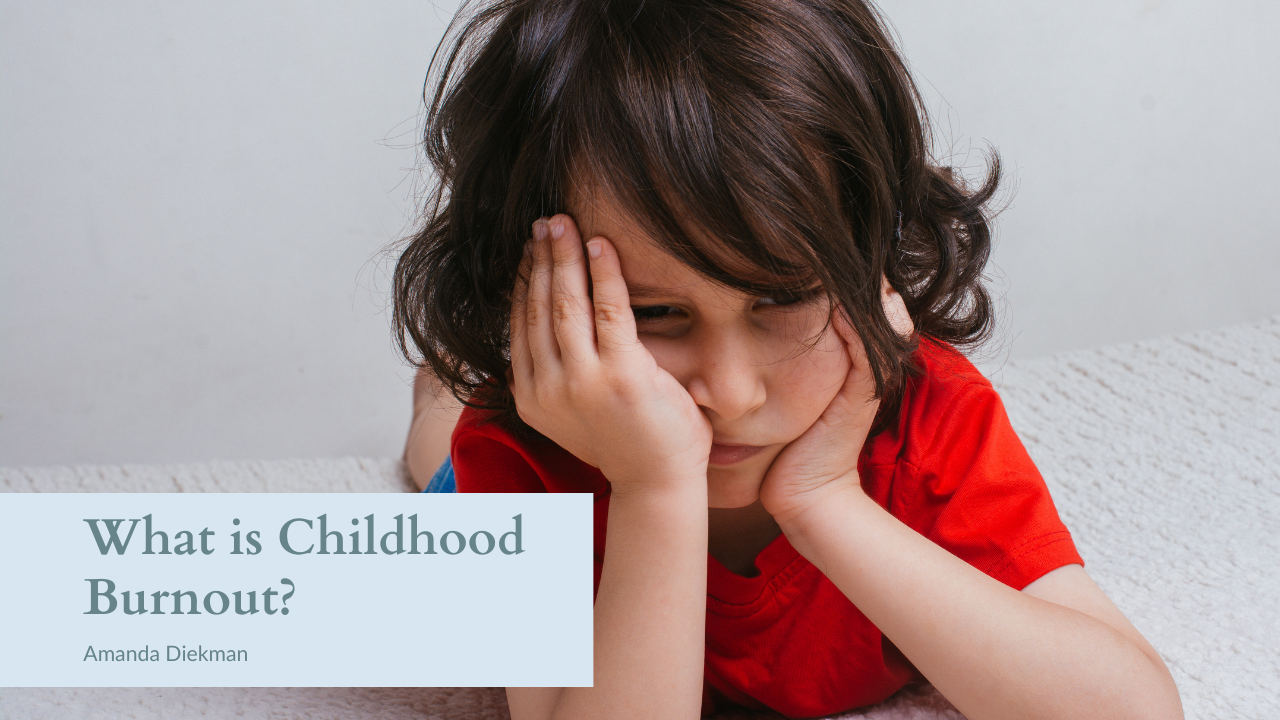
When my 6-year old abruptly stopped going to school, started aggressively melting down with the tiniest sound or provocation, reduced all foods to only 2, and began spitting and growling more than he was talking, I had NO IDEA what I was seeing. I had no framework or definition that made any sense to explain his sudden descent.
What is this? How do I respond? What did I do wrong, and how do I fix it? What professional do I call? Who can I tell who won’t turn us in to child protective services? Where did my sweet child go??
I was frozen with fear, and deep in my heart, I was also sick with self-loathing. I did something wrong, I just knew it. Whatever this was, it was my fault because a parent’s first responsibility is to keep their kid safe, and this child was obviously not OK. I was desperate for understanding, and I had none.
In this blog, I am going to give you the knowledge, the definitions, and the frameworks that I longed for during those awful days and nights.
What is burnout?
Burnout is a long-term state of physical, emotional, and cognitive exhaustion caused by prolonged stress and/or unmet needs.
Burnout is what happens when the nervous system has been in overdrive for too long. Simply put, burnout comes from “too much, for too long.” The child or teen has been pushing through their cognitive overload, social demands, practical expectations, and emotional exhaustion over an extended period of time. They keep on pushing through until the point where their body determines “we can't do this anymore,” and it goes into a full fledged retreat.
How does it start?
The onset of burnout can either be a sudden drop-off or a steady decline. Some families find that their kid’s energy and capacity has been steadily plummeting. Maybe they didn’t notice it day-by-day, but when they look backward over weeks and months, they can see a pattern of increasingly chronic exhaustion.
But sometimes that drop off in energy and capacity can be really sudden— from one day to the next. One day you had a child who was functioning more or less normally, and then the next day they are unable to move, speak, engage, leave the house. I know a child who was surrounded by loving friends, active in football, a total jokester and a caring big brother, a star student who experienced a sudden onset of burnout, trashing the school cafeteria and screaming at school personnel before being picked up by his parents. His life was never the same again.
What do we know about burnout?
Burnout has been most studied in adults related to work and professional burnout, but in their best-selling book “Burnout,” sisters Emily and Amelia Nagoski argued that many adults experience pervasive burnout from unprocessed stress and emotion. In preliminary phases, burnout has also been studied among neurodivergent adults struggling to thrive in a neurotypical world. (If you think this might be you, check out the work of Dr. Megan Anna Neff and their book “The Autistic Burnout Workbook”).
Sadly, little has been studied about burnout in kids. But I have spent years learning from and healing our own family’s burnout and then helping hundreds of other families navigate their burnout. I’m speaking from hundreds of different stories of lived experience, and drawing from all the research there is to date (and hoping for much more scholarship to come!).
The three core features of burnout
The core features of burnout can be recognized across the lifespan, as they affect both children and adults. Let’s break down these three main signs of burnout:
- Pervasive Exhaustion
For burned out adults, this often looks like needing to rest constantly, experiencing brain fog, or feeling a deep fatigue that sleep doesn’t seem to fix. But in kids, exhaustion often shows up differently. It can look like a child who suddenly stops playing—or whose play becomes rigid and repetitive. You may notice that they’re saying “I can’t” more often:
- They can’t go to school.
- They can’t sit through dinner.
- They can’t respond kindly.
What looks like defiance, depression, or moodiness is actually a sign that their energy reserves have hit rock bottom. They are completely and totally exhausted.
- Loss of Skills
Burnout can cause kids to lose skills they once had, which can feel terrifying as a parent. Maybe your child, who was once potty-trained, is now having frequent accidents or refusing to poop in the toilet anymore. Maybe they’re struggling to speak or going completely silent when they didn’t have any communication challenges before. Maybe they are having trouble following multi-step instructions, or completing even simple, daily requests like brushing their teeth. Maybe they can’t put themselves to sleep anymore, coming to you all night long for soothing. You might see emotional regulation skills disappear, with frequent meltdowns over seemingly minor issues.
This loss of skills isn’t permanent, but it’s real. Think of it like an over-stuffed sock drawer—it can’t even open and close properly anymore and there’s definitely no room for any more socks. In burnout, there’s no capacity left to hold or process new information or requests.
- Increased Sensory Sensitivities
Sensory issues that your child once managed may suddenly feel unbearable. They might complain about the way you chew or breathe, demand that lights be turned off, or recoil from touch. They might insist on wearing the same clothes day and night, or resist any kind of body care. They may scream like you are hurting them when you just lay a hand on their shoulder.
What’s happening here is a heightened state of sensory awareness that makes everyday stimuli feel overwhelming. These sensitivities aren’t “cries for attention.” They’re not feigned, exaggerated, or imagined—they’re a real, biological response to burnout.
We are not alone.
Part of the searingly painful loneliness of burnout is not having examples of healing to look to when we are walking through the darkest parts. Because burnout is stigmatized and isolating, it is incredibly hard to find supportive community. And we desperately need hope and community to walk this path.
But hope is absolutely possible. I have seen it for my two kids and for hundreds and hundreds of other families. When I first began sharing online in January of 2022, I had a few hundred followers, mostly friends and close community members. But as I processed our burnout experience in this public space, people began following along, sending me DMs, and sharing their experiences, first a trickle, then a flood. People were desperate to hear more about our experience of burnout, how it impacted me as a parent, and how we found healing through lowering demands, aligned expectations, and practicing radical acceptance. Being open about our suffering and describing our healing, often in real time, created the massive low demand community that exists today.
This experience taught me that burnout is not as rare as it feels to those of us suffering alone in our homes. There are thousands of other families walking the same path. In our isolation, we feel like the only people on the planet spoon feeding our kids, being sued by the school system for truancy (when we would desperately like our kids to go!), and taking out a loan just to pay for Robux. We feel so alone. But there are so many of us. We are never alone.
Ready to dive deeper into understanding burnout?
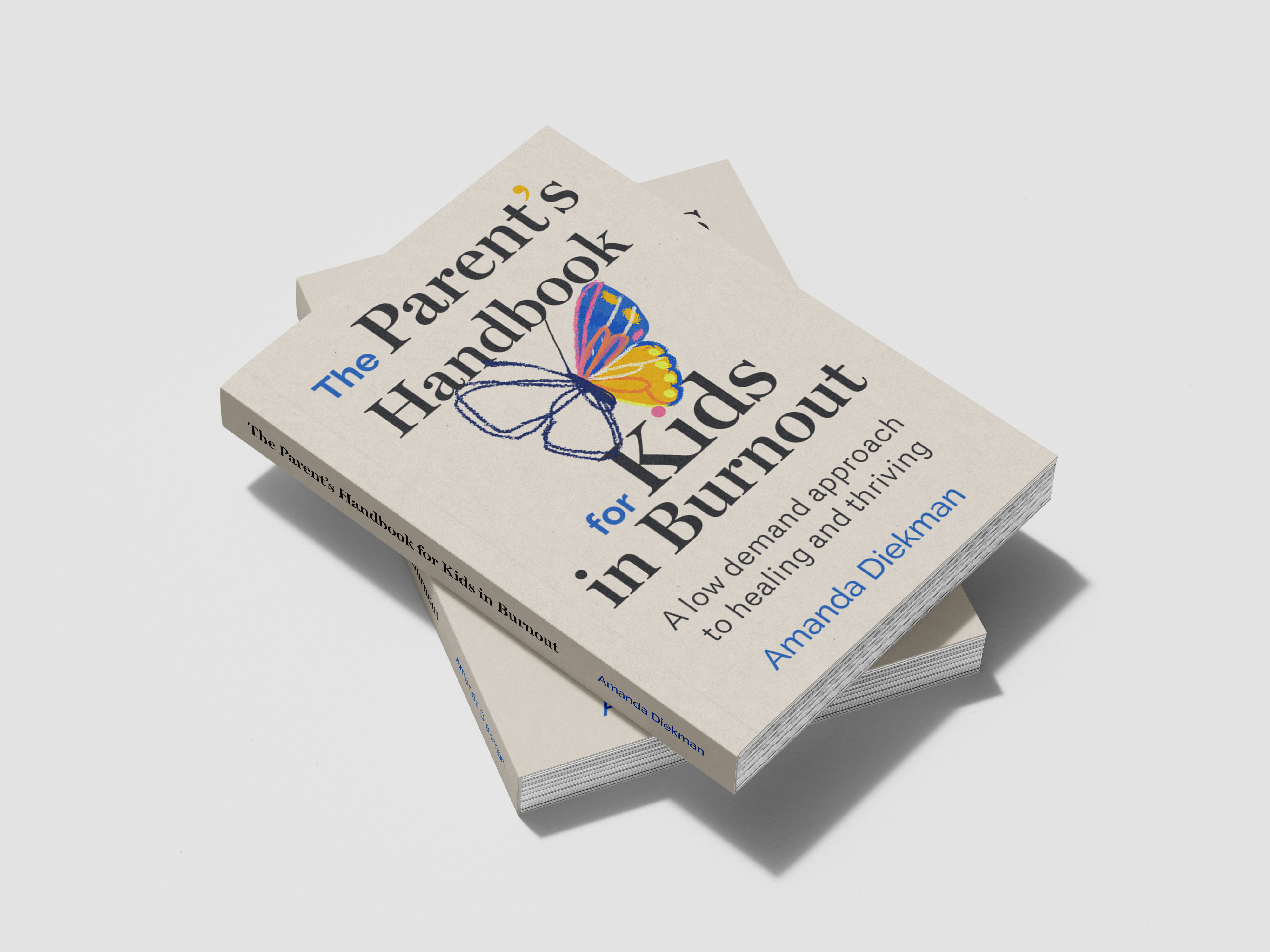 My newest book is here to help!
The Parent's Handbook for Kids in Burnout is a practical, research-driven resource to help you identify sources of stress and respond with compassion, while continuing to support your child’s growth and thriving.
With chapters to meet you wherever you’re at, this comprehensive handbook comes with a burnout assessment quiz, downloadable tools and charts, and dozens of practical stories and examples. Get the answers you need right away with chapters on showering, sleep, screens, school, meds, therapies, meltdowns, and mental health emergencies.
Quiz: "Why is everything so hard?"
................
Get your quiz results and discover one concrete next low-demand step toward ease and joy.
Low Demand in your Inbox
Juicy weekly emails include real-life parenting stories, low-demand ideas and tips, plus a collection of my favorite resources. A goodie-box of an email.
We hate SPAM. We will never sell your information, for any reason.